
Remodeling & RenovationsOctober 28, 2026
Winning High-Ticket Kitchen and Bath Leads Before the Holidays
Read →
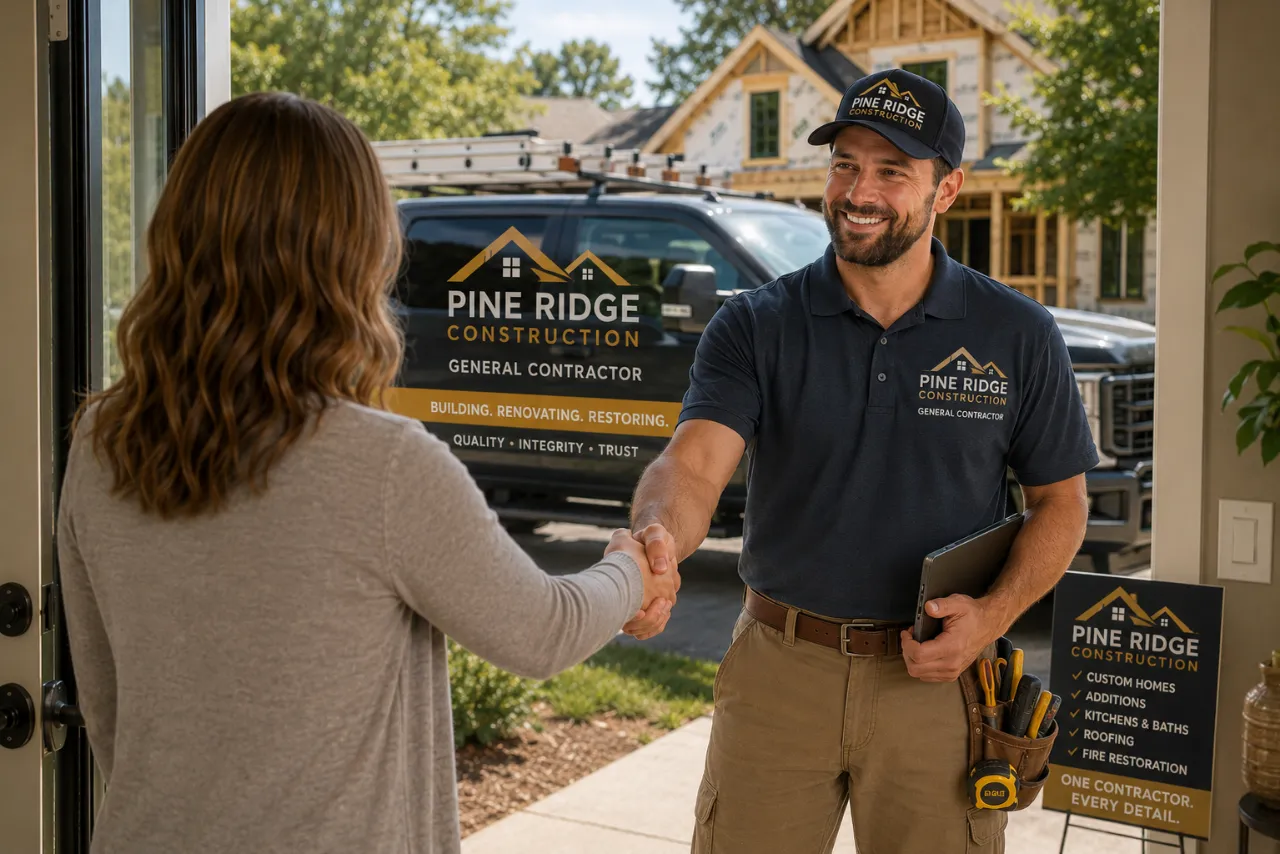
For general contractors, taking whatever comes through the door is a recipe for low margins. A small repair job, a project far outside your service area, and a client with an unrealistic budget can each consume hours of estimating time and produce little or nothing. The most successful GCs are not the ones with the most leads. They are the ones with the right leads.
Marketing for a general contractor should be about attracting the kinds of projects you actually want to build, and quietly filtering out the rest.
Before you spend a dollar on ads, write down what a great project looks like for your company. Consider the type of work (additions, new builds, structural repairs, commercial tenant improvements), the typical size, the budget range, the location, the timeline, and the type of client. Be specific. "Residential additions between a set range in a defined service area" is a useful definition. "Anything" is not.
Your ads should reflect that definition. If you build additions and whole-home renovations, target searches like "home addition contractor" and "general contractor [city]," and consider negative keywords for small tasks you do not want, such as "handyman," "small repair," "odd jobs," or "cheap." The more your ad copy and landing pages describe your real work, the more they attract people who are looking for it.
A well-designed page works as a screening tool. Show the type and scale of projects you take. List your service area. Describe your process. Mention minimum project sizes if that is appropriate for your business. Some visitors will decide they are not a match and leave, which is a good outcome because they never become a time-consuming estimate request. Those who stay are more likely to be a fit.
Whether leads come by phone or form, ask a few questions that reveal fit:
You do not need to interrogate anyone. A friendly, short set of questions lets you decide whether to schedule a visit, request more information, or refer the project elsewhere. It also signals professionalism.
General contracting involves many moving pieces: initial inquiries, site visits, estimates, revisions, contracts, scheduling, and permits. A simple CRM or workflow tool keeps every lead and its status visible. Automation tools, workflows, and CRM implementation can send reminders, log communication, and help you follow up consistently, which is especially valuable when you are running job sites and cannot babysit your inbox.
Not every lead source is equal. Some sources may send frequent inquiries that rarely become projects. Others send fewer but better-fitting leads. If you track results by source, you can see which ones produce signed contracts and healthy margins. Call and form tracking connects the dots between a marketing channel and an actual project, so you invest more in what works and less in what does not.
Turning down an unsuitable project is a skill. A courteous message that explains you are not the right fit, and perhaps suggests a better type of provider, protects your reputation and saves everyone time. Over the long run, a business known for taking the right projects and doing them well builds stronger referrals than one that takes everything.
Every quarter, look at which leads became projects, what the average margin looked like, and which sources gave you the best return. Adjust your keywords, pages, and follow-up accordingly. Small improvements in lead quality compound over time.
Paid ads are only one source of good projects. Architects, designers, realtors, property managers, and trade partners often send better-fitting work because they already understand your specialty. Keep a short list of these relationships and stay in touch with a simple update after each completed project. When a referral arrives, track it alongside your ad leads so you can see how it compares. Many general contractors find that a handful of strong referral partners, combined with focused advertising, produces a more reliable pipeline than either channel alone. It also makes you less dependent on any single source of leads.
MicroManaged Media, Inc., the team behind Get Calls AI, helps general contractors attract better-fit leads, miss fewer opportunities, and track which marketing produces profitable projects. Call (251) 765-0333 to request a free consultation and we will help you define your ideal project and build your pipeline around it.
We build lead generation systems for HVAC, plumbing, roofing, and electrical contractors.
Call (251) 765-0333 for a Free Consultation →